Mistolla: A Brush Script Font for Handmade Goods
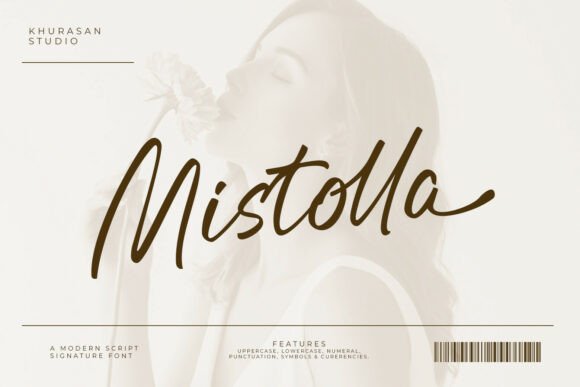
Some fonts feel stiff the moment you type them. Others seem to breathe. Mistolla belongs to the second category. It is a script handwriting font with a natural brush effect that mimics the pressure, flow, and slight irregularity of real hand-lettering. The moment I tested it on a mockup for a candle label, I knew this was a font that would sell the feeling of a product, not just label it.
What sets Mistolla apart is the texture of its strokes. The brush effect isn't overly distressed or messy. It is controlled but organic, giving each letterform a smooth, expressive quality. Ascenders sweep upward with a gentle taper. Descenders loop with a soft, hand-drawn ease. The baseline is lively but not chaotic, which matters when you're designing for customers who expect a certain level of polish. This font reads as approachable, warm, and quietly confident — the kind of lettering you'd expect to find on a boutique soap wrapper or a wedding welcome sign.
Where Mistolla Shines in Craft and Product Work
I test fonts by imagining them on actual products. Mistolla cleared that test quickly. It has a natural home on handmade labels, especially for items where the packaging needs to convey care and craftsmanship. Think candle jars, honey jars, small-batch jam labels, or lip balm tubes. The brush texture softens the look of glossy label stock, and on kraft paper, it feels almost like a stamp pressed by hand.
For printable product creators, this font is a strong candidate for planner pages, sticker sheets, and digital download bundles. The letters remain crisp at moderate sizes, and the contrast between thick and thin strokes holds up well in grayscale or color prints. I've used it on round sticker designs for bakeries and small shops, and the result always looks like custom calligraphy, even though it's just typed text placed on a circle frame.
Invitation designers will find Mistolla especially useful for names, headings, and short decorative lines. A wedding invitation suite that pairs the couple's names in Mistolla with a clean sans serif font for the details feels instantly romantic without being overly formal. It works for birthday invitations, baby shower cards, and seasonal greetings too. The brush texture gives just enough flourish to mark the occasion without overwhelming the layout.
Product Presentation and the Emotional Pull of Lettering
When a customer picks up a product, the font does quiet work. It signals quality before a single word is read. Mistolla carries a handmade personality that reinforces the value of the item itself. A simple tag tied to a linen sachet or a hang tag on a crocheted garment feels more intentional when the lettering looks hand-brushed. This font shifts product perception from "printed at home" to "crafted with care."
Consistency across a product line also matters. If you sell a collection of items — say, a candle, a room spray, and a wax melt set — using Mistolla across all labels creates a unified brand presence. Customers begin to recognize the lettering style before they even read the scent name. That recognition builds trust over time, and trust leads to repeat sales. The font's brush strokes become part of your brand's visual identity.
Readability and Practical Use Across Materials
Mistolla is designed for short phrases, names, titles, and decorative wording. It is a display font at heart, not a text font. This means it excels on product labels, signage, and headlines but would not be the right choice for lengthy product descriptions or ingredient lists. For those, I pair it with a simple sans serif or a light serif font that handles dense text comfortably.
When cutting with a Cricut or Silhouette machine, the brush strokes need thoughtful sizing. At very small sizes, the thin parts of the strokes can become fragile or difficult to weed. I recommend sizing Mistolla at least 1.5 inches tall for vinyl cuts, and slightly larger for intricate materials like adhesive foil or glitter vinyl. For printed stickers and labels, the font holds up well at 12 points and above, though I prefer to set it at 14 to 18 points for emphasis on product labels. Test cuts are always worthwhile, but the font's stroke contrast is well-balanced enough that it performs reliably on most home cutting machines.
For mockup previews, Mistolla looks especially convincing because the brush texture softens the digital edge. When you place the font on a product mockup — say, a kraft paper label or a frosted glass jar — the lettering blends with the surface texture rather than floating on top of it. This makes your listing photos feel more like finished product shots and less like design drafts.
Pairing Mistolla with Other Typefaces
An expressive script font like Mistolla needs a partner that does not compete for attention. I most often reach for a clean sans serif font — something with a neutral, balanced structure — to handle secondary text. The contrast works because Mistolla provides the warmth and movement, while the sans serif offers clarity and calm. This pairing is ideal for product labels, where the product name sits in Mistolla and the weight, scent, or size sits below in a simple sans.
Another direction I enjoy is pairing Mistolla with a delicate serif font for invitation work. The brush script sets a romantic, handcrafted tone, and the serif adds a touch of traditional elegance. The combination feels curated rather than default, which matters when you're designing stationery for clients who want something that feels personal. For bolder designs, a condensed display font in all caps can frame Mistolla nicely, especially on signage or wall art where the hierarchy needs to be instantly readable from a distance.
What to Check Inside the Font Files
When you install Mistolla, take a few minutes to explore what is included beyond the standard character set. Fonts with a brush script personality often include alternates, ligatures, and swashes that dramatically expand your design options. Look for beginning and ending swashes that can add a graceful flourish to a single word. Check for stylistic alternates that offer different shapes for certain letters, giving you the ability to customize the look of a name or phrase so it feels truly unique. Ligatures can smooth out letter combinations that might otherwise feel disconnected, which is especially helpful for maintaining the handwritten flow in longer words.
File formats matter depending on your workflow. OpenType files are generally preferred for desktop design work. If you are designing on a tablet or using apps like Procreate, check whether the font is compatible with your setup. For Cricut Design Space and Silhouette Studio, standard OTF or TTF formats work well, though you may need to access alternates through a character map or font management tool. If the font description mentions multilingual support, test it with any accented characters your product names or customer requests might require.
Licensing and Commercial Use for Small Shops
Before you list a single product using Mistolla, confirm the license terms. A standard desktop license typically covers personal use and printed materials, but selling physical products, digital downloads, or SVG designs often requires a commercial license. If you plan to use the font on merchandise — mugs, shirts, tote bags, signs — or inside templates and printables that customers purchase, verify that the license allows those uses. Some foundries require an extended license for products where the font becomes the primary design element.
For Etsy sellers, printable creators, and handmade business owners, a clear commercial license is not optional. It protects your work and gives you peace of mind when scaling your shop. I keep a folder of license confirmations for every font I use in product designs, and I recommend any crafter do the same. Mistolla is the kind of font that can become a signature style across your product line, so knowing you are covered legally lets you use it with confidence.
Why Mistolla Feels Made for Handmade Businesses
Some fonts are beautiful on screen but fall flat on a physical product. Mistolla translates. The brush texture carries through to print, the stroke contrast holds up at common label sizes, and the letterforms retain their personality on everything from cotton tote bags to glossy sticker paper. For a small shop owner, that dependability is worth more than a hard drive full of pretty but impractical typefaces.
This font understands the balance between looking handmade and being commercially usable. It does not pretend to be perfect penmanship, but it also does not veer into illegibility. It sits in the sweet spot where a styled product tag looks like it was lettered by a skilled hand, not mass-produced by a machine. That is the exact quality that makes customers pause, pick up an item, and feel something before they even check the price.
Mistolla belongs in the toolkit of any crafter who wants their products to feel personal, professional, and unmistakably handcrafted.